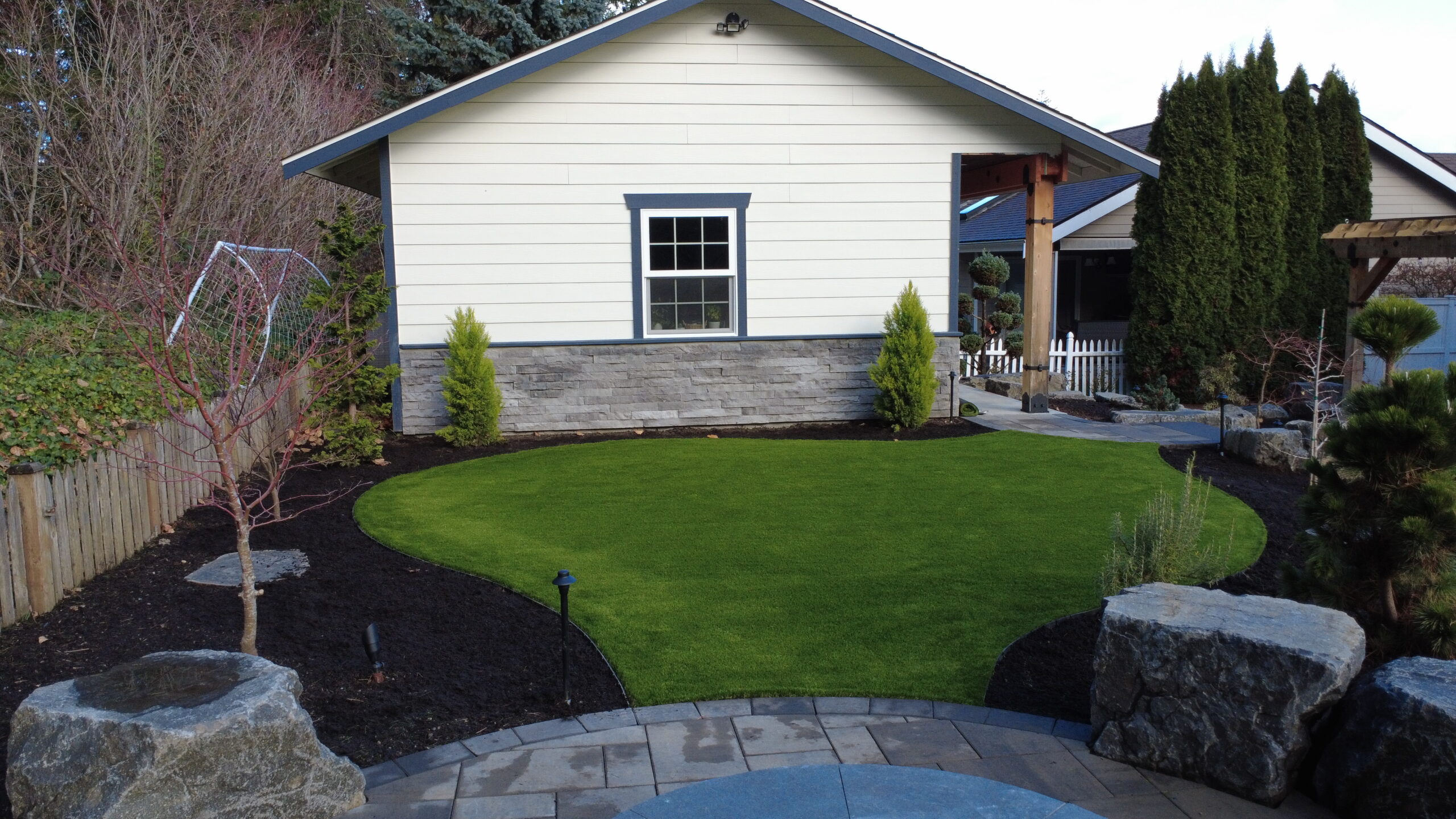
Avoiding Turf Regrets Before Seattle’s Rains Return
Artificial turf can feel like the perfect answer to muddy lawns, bald spots, and weekend mowing. Many Seattle homeowners get excited when the new green carpet goes in during a stretch of sunny weather. Then the fall rain returns, and problems start to show up: puddles that will not drain, fibers that lay flat, and messy edges that collect mud and leaves.
That is why artificial turf installation in Seattle is not a simple plug-and-play project. Our area has constant drizzle, dense shade, and soils that like to hold water. A lawn that might work fine in a dry climate can fail fast here if it is not designed for local conditions. In this article, we will walk through the most common mistakes we see, how to avoid them, and smart questions to ask any installer before you sign anything.
Pacific Turf Northwest focuses on premium, ultra-realistic synthetic turf lawns, pet areas, and putting greens that are built for the Pacific Northwest. We want your yard to look as good in January as it does in July, so we design with our weather in mind from the very first step.
Underestimating Seattle’s Drainage and Soil Challenges
One of the biggest regret-causing mistakes is skipping a proper site assessment. When a contractor does not study how water already moves through your yard, problems tend to show up as soon as the fall storms arrive.
Common issues from poor assessment include:
- Water pooling in low spots that were not graded out
- Soggy patches where compacted clay never got opened up
- Turf that drains in some areas but not others
Much of Seattle has heavy, compacted soil that holds on to moisture. If the base under your turf is not planned for that, water will sit instead of passing through, and the system will struggle.
Another frequent problem is cutting corners on base preparation. The green turf on top is only as good as the rock and grading underneath. Mistakes we see often include:
- Using the wrong type or size of base rock
- Not digging deep enough for a stable base
- Skipping proper compaction between layers
All of this can lead to dips, ripples, and standing water under the turf. A well-graded, permeable base is what lets you walk on your lawn in November without sinking or slipping.
Installers also need to think about water that comes from outside the turf area. Roof runoff, sloped yards next door, and downspouts that empty near the new lawn can overwhelm even a good base if they are not managed. Smart solutions can include:
- Adjusting downspout locations
- Adding drains or French drains where needed
- Shaping gentle swales that send water away from the turf
A local pro, will design for drainage first, then focus on the pretty green layer on top.
Choosing the Wrong Turf for Shade, Pets, and Play
Another common mistake is picking turf based on looks alone. It is easy to fall for the softest or brightest sample, but not every product fits every yard. Some turfs are better for full sun, others for heavy foot traffic or pets. The wrong match can mean:
- Mildew and odor buildup in damp, shaded corners
- Fibers that flatten and turn shiny where kids play
- Backing that holds water instead of draining quickly
Seattle has lots of shade, and many yards never fully dry out. Turf in those spaces needs good airflow and drainage to resist moss and algae.
Infill and blade technology also matter more than many people think. Cheap infill can compact into a hard layer, trap smells, and feel uncomfortable to walk on. A well-chosen system can:
- Help blades spring back after use
- Keep drainage channels open
- Stay cooler and more pleasant underfoot
Fiber shape and backing design affect how well the turf stands up to kids, dogs, and regular use in wet weather. Some fibers are made to resist matting, while some backings allow faster water flow.
You also want to match the turf system to your real lifestyle. Before picking a product, think about:
- How many pets you have and where they go
- Whether kids will be playing sports on the lawn
- If you like to host gatherings on the turf area
- Whether you want a lawn, a pet zone, or a putting green
When turf is chosen to fit daily life, it lasts longer and feels better to use.
Poor Edging, Seams, and Transitions That Ruin the Look
Even if the base and product are right, sloppy details can make a new turf lawn look fake fast. One big issue is visible seams and mismatched grain. Every roll of turf has a grain direction, similar to carpet. If panels are laid with the grain going different ways, you can see:
- Obvious lines where pieces meet
- Color shifts that show every seam
- A patchwork look that gets worse in low winter sun
Professional installers line up the grain, trim carefully, and use quality seaming methods so those lines stay hidden.
Weak or missing edging is another headache. Without a solid edge, turf can curl up over time, base rock can spread, and weeds can sneak in around the borders. Good edging does a lot of quiet work:
- Holding the base and turf firmly in place
- Giving a clean line against beds and paths
- Keeping the lawn shape consistent year after year
Height transitions are just as important. Poor planning can leave you with small trip-lips at patios, puddles along the edge, or awkward gaps at garden beds. Thoughtful transitions are especially important in tight city yards and on sloped lots, where small changes make a big difference in how the space feels and works.
Ignoring Long-Term Maintenance and Seasonal Reality
Many people hear “low maintenance” and think “no maintenance at all.” That leads to one of the most common regrets. Artificial turf needs less care than natural grass, but it still needs some attention, especially in our climate.
A simple care plan should include:
- Regular brushing to keep fibers standing tall
- Blowing or raking off leaves and needles
- Checking and topping off infill when needed
Seattle’s fall leaf drop and winter storms can cover a lawn in organic debris. If that layer sits, it can mat the turf and slow drainage.
Homes with pets also need a plan. Pet areas should have good drainage, the right products under the turf, and a clear cleaning routine to help manage odors in damp weather. Shaded, moist spots can also invite algae and moss if air does not move and surfaces stay dirty. Routine cleaning and good airflow help keep the surface safe and fresh.
Finally, many homeowners do not ask about warranties and installer support until a problem pops up. Before your project starts, it helps to know:
- What is covered by the product warranty
- What workmanship guarantee the installer offers
- Whether they provide guidance for seasonal care
A reputable local installer will be upfront about what to expect in our climate and how to keep your turf looking good through all four seasons.
Plan a Turf Project You Will Still Love Next Winter
When we look at turf projects that disappoint Seattle homeowners, the same patterns show up again and again: weak drainage planning, turf that is not a good match for the site, sloppy seams and edges, and no realistic maintenance plan. Artificial turf works best when you treat it as a full system, not just a product you roll out. The design, base, materials, and installation details all need to work together with your rain, shade, soil, and lifestyle.
At Pacific Turf Northwest, we focus on synthetic lawns, pet areas, and putting greens tailored to Pacific Northwest conditions. Planning artificial turf installation in Seattle before the heaviest rains hit gives time for proper assessment, base work, and settling, so your yard is ready when the weather turns. With the right design and installation, your green lawn can stay inviting in the wet months, not just during summer sun.
Transform Your Seattle Property With Low-Maintenance Turf
If you are ready to stop battling muddy yards and constant mowing, our team at Pacific Turf Northwest can help you create a clean, green landscape that fits your lifestyle. Explore how our artificial turf installation in Seattle can provide a durable, pet-friendly surface that looks great year-round. Tell us about your project today through our contact page so we can put together a customized plan for your property.