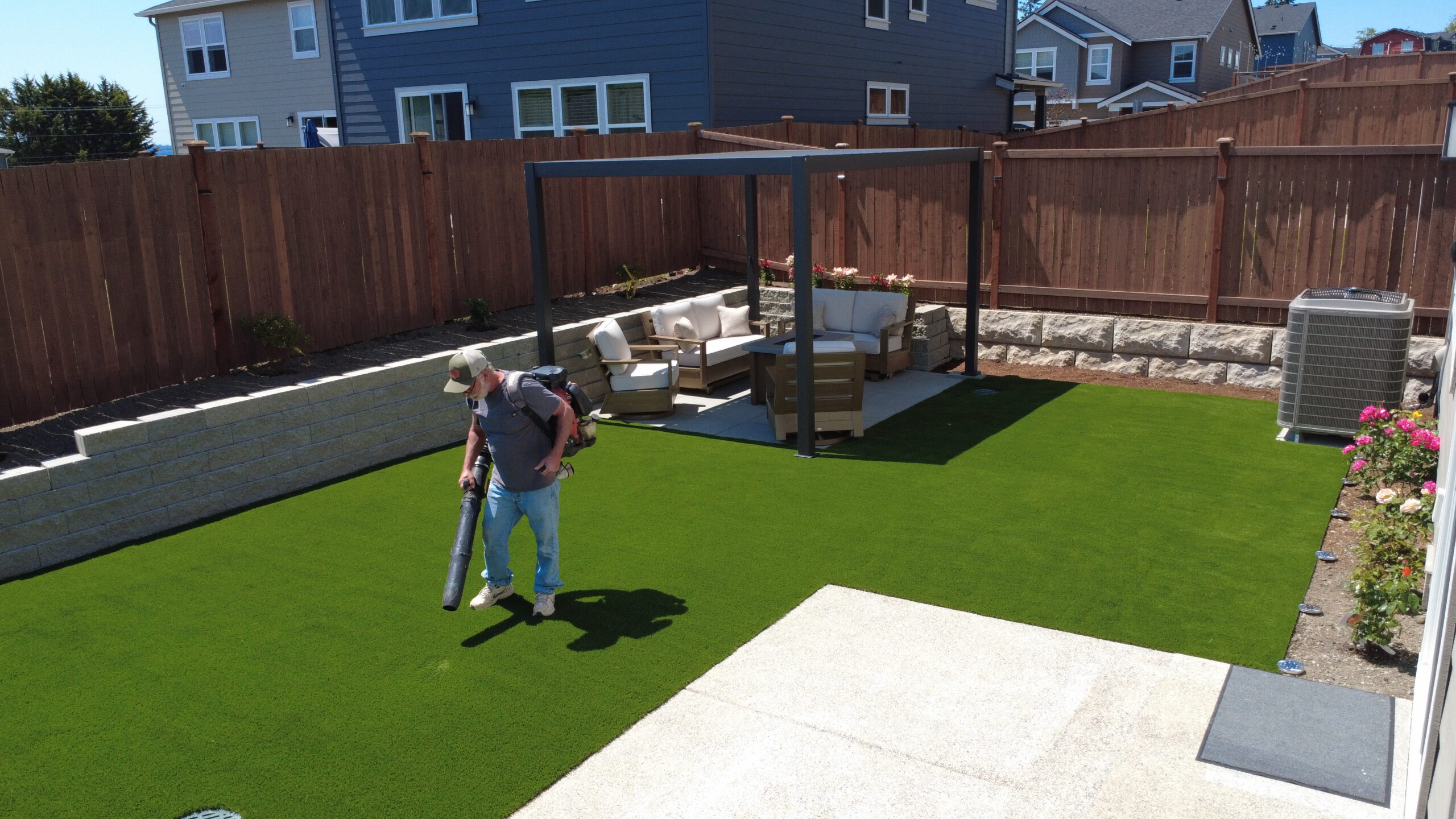
Turn an Unused Side Yard Into a Daily Retreat
A narrow side yard in Seattle can be one of the messiest spots on a property. It stays soggy for months, gets slick and muddy in fall and winter, and by the end of summer the thin strip of grass is tired and patchy. Many homeowners give up on the space, using it only to stash bins or squeeze past on trash day.
With premium synthetic turf in Seattle, that same forgotten strip can become a clean, dry, green lane you use every single day. It can be a safe path from the front yard to the back, a place for pets, or a little pocket spot to sit with a cup of coffee, even when the ground everywhere else is soaked.
As fall brings regular rain and cooler temperatures, it is a smart time to plan or install turf in a side yard so it is ready before the deepest winter storms. Our team at Pacific Turf Northwest focuses on ultrarealistic synthetic turf, including systems for pets, play areas, and putting greens, and we want to share how we think about side yard design in the Pacific Northwest.
Why Seattle Side Yards Deserve a Better Plan
Most Seattle side yards fight the same set of problems. Houses sit close together, so those strips get:
- Dense shade from tall fences and neighboring walls
- Compacted soil from years of foot traffic
- Constant moisture from rain running off roofs and patios
- Poor drainage that turns low spots into muddy channels
Natural grass does not love that mix. There is little sun for healthy growth, and the roots never get to dry out. Add in trash cans rolling through, delivery people cutting across, kids racing past, and pets doing laps, and it is no surprise that grass struggles.
That is a shame, because a side yard can be one of the most useful parts of a property. With the right surface, it can serve as:
- A daily dog run that does not turn into a mud pit
- A play lane for kids with balls, scooters, or chalk along the fence
- A clean access path to gardens, gates, and sheds
- A simple sitting nook with a bench and a small planter
Without a solid surface, you run into safety and comfort issues. Wet soil and mossy pavers can be slippery. Uneven stepping stones can catch a toe or a wheel. Mud sticks to shoes and paws, then ends up on floors, rugs, and car seats.
This is where synthetic turf in Seattle fits so well. Quality turf stays green in shade, drains fast, and gives steady footing all year. Compared with gravel, pavers, or bare soil, turf is usually:
- Softer underfoot for kids and pets
- Quieter to walk on, especially near bedroom windows
- Easier to keep clean, with fewer loose rocks or gaps
Gravel and bare soil tend to move and track everywhere, and full-width pavers can feel cold and hard. Turf offers a middle ground that feels more like a lawn without the headaches of real grass.
Designing Your Side Yard for Everyday Living
The best side yards start with a simple question: what do you want to do there every day? It helps to pick a main purpose, such as:
- Pet corridor or dog run
- Kids’ play channel
- Utility path for bins, bikes, and yard tools
- A mixed-use lane with room for both people and pets
We suggest making a quick sketch of the space. Mark doors, gates, hose bibs, AC units, gas meters, and garbage storage. Notice where you actually walk now. The goal is to line up the turf layout with your daily patterns so you are not fighting the design.
In tight spaces, layout and material choices really matter. A few smart strategies:
- Use one continuous turf “runway” from front to back for simple, daily movement
- Create small turf “rooms” for sitting or play, linked by stepping stones or paver stones
- Add a firm, non-turf pad for garbage cans, compost bins, or storage
For side yards, we often recommend a slightly lower, firmer turf pile. It looks neat, handles footprints better, and makes it easier to roll bins or move gear. Edging is also important. Clean borders along fences and foundations keep the turf looking tidy and prevent edges from fraying or shifting.
Comfort is not just about footing. Privacy, light, and small touches make the space welcoming. Simple ideas like:
- Vertical planters or trellis panels on the fence
- A narrow planting border for ferns, grasses, or shade shrubs
- Low-voltage lighting along the turf edge for dark winter evenings
Color and texture matter too. Turf that matches the softer, deeper greens of Pacific Northwest plants looks more natural against rhododendrons, cedars, and mossy trunks. In cloudy, low-light conditions, a slightly varied fiber color can keep the surface from looking flat or artificial.
Solving Drainage, Mud, and Pet Wear Once and for All
Seattle rain quickly shows any weakness in a yard. With synthetic turf, the surface itself is not the full story. The base below is what keeps the area usable in heavy weather.
A well-built base usually includes:
- A graded subbase that moves water away from the house
- Compacted aggregate that stays firm, even when wet
- Turf backing that lets water pass through quickly
When we design a side yard, we pay close attention to slope and drainage paths. Sometimes that means adjusting the grade, sometimes adding drains or tying into existing systems. The goal is simple: no standing water, no soft spots, and no puddles at doors or gates.
For homes with pets, a side yard can be the perfect dedicated pet zone. Pet-focused turf systems often use:
- Antimicrobial infill to help with odor control
- Backing with high drainage rates for fast flushing
- Good airflow below the turf so moisture does not sit
Maintenance for pet areas is usually straightforward: regular rinsing, quick spot cleaning, and the occasional deeper wash. Keeping pet traffic focused in this one area helps protect the rest of your landscape, especially softer lawns or garden beds.
Durability is just as important as drainage. Side yards carry a lot of repeat traffic in the same narrow tracks. To keep the turf looking good, we focus on:
- Tougher turf fibers that spring back from daily use
- A firm base that resists rutting from wheels and feet
- Thoughtful seam placement away from high-wear lines
- Strong edging to stop lifting or bunching near fences and corners
Those details are easy to miss at the design stage, but they make a big difference after a few rainy seasons and hundreds of garbage days.
Seasonal Tips for Installing Synthetic Turf in Seattle Side Yards
Many homeowners in the Seattle area like to tackle side yard projects in the fall. The soil is still workable, crews are not fighting extreme summer heat, and most outdoor gatherings have slowed down. It is a practical window to get the messy work done.
Having the side yard finished before the wettest winter stretch means you go through the dark, rainy months with:
- A mud-free path for kids and pets
- Cleaner floors since less dirt comes inside
- Safer footing when surfaces all around are slick
Weather always matters. Experienced installers watch rain forecasts and protect the subbase from getting saturated. Proper compaction should not be rushed, especially on ground that already holds moisture.
Homeowners can help the process by:
- Clearing clutter, old pots, and loose materials ahead of time
- Trimming plants back from fences and walls to open up access
- Pointing out any known drainage issues, like places that always puddle
Side yard projects are usually quicker than full lawns because of the smaller area and simpler shapes. That makes them a great way to upgrade daily life without a big, long disruption.
Take the Next Step Toward a Mud-Free Side Yard
A well-designed synthetic turf side yard turns a forgotten strip into a real part of your home. You get year-round usability, cleaner access to gates and gardens, a durable lane for pets and kids, and a finished look that ties your whole property together. In a climate where tight spaces stay damp and natural grass fails again and again, turf gives you a dependable, low-stress surface.
At Pacific Turf Northwest, we design side yards around real routines: walking the dog without dealing with mud, kids racing through without slipping, and rolling bins along a firm, stable path. With the right layout, base, and turf choice, that narrow corridor becomes a simple, reliable part of everyday life in the Pacific Northwest.
Get Started With Your Project Today
If you are ready to enjoy a greener, low-maintenance yard in any season, our team at Pacific Turf Northwest is here to help. Explore how synthetic turf in Seattle can transform your outdoor space with cleaner lines, easier upkeep, and year-round usability. We will walk you through options, answer questions, and design a solution that fits your property and lifestyle. To discuss your project or schedule a consultation, simply contact us today.