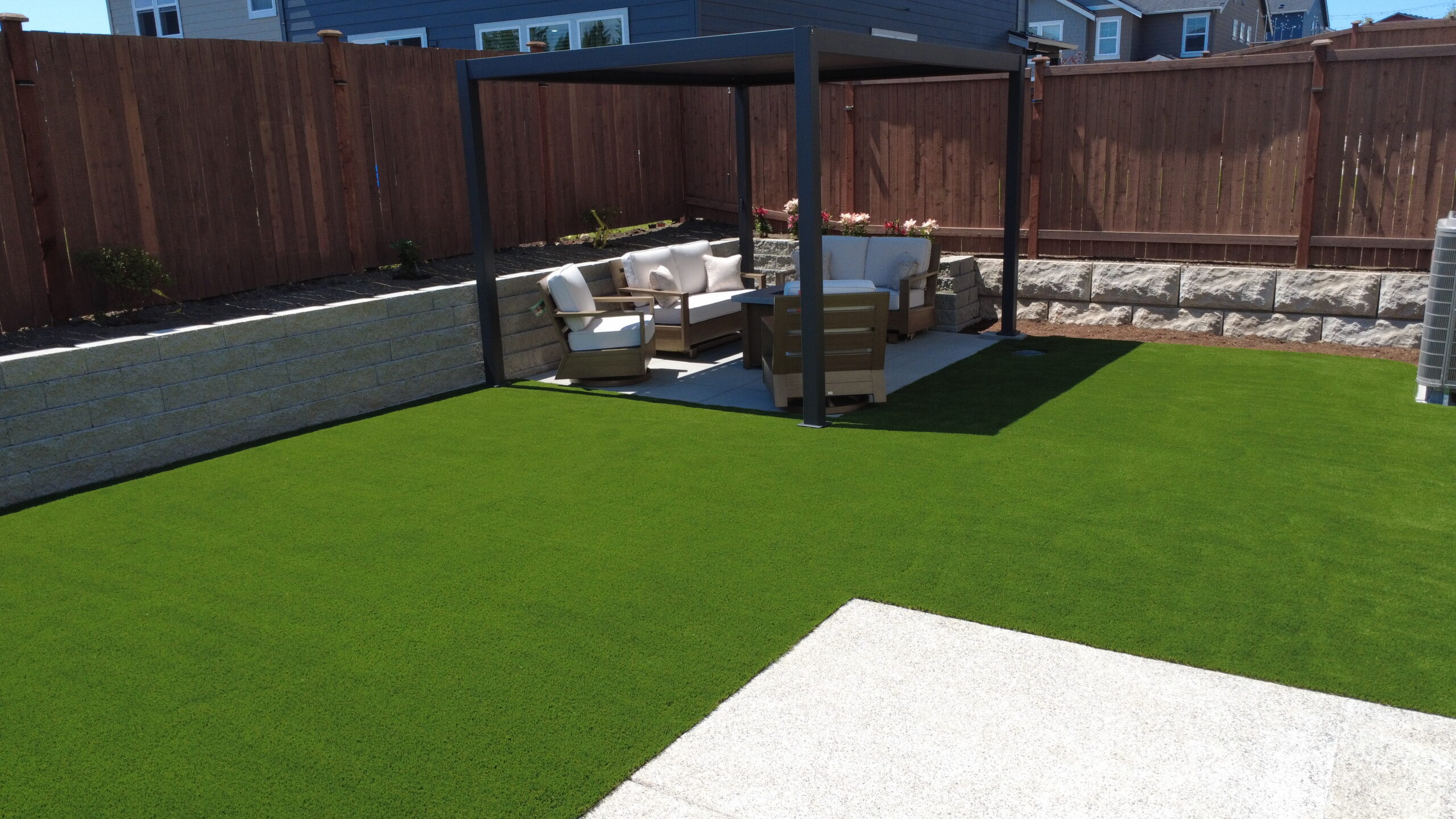
Mud, odor, and torn-up grass push a lot of Seattle dog owners to look at artificial turf. Pet-friendly artificial grass installation sounds like the simple answer. No mud, no mowing, just a clean yard for your dog all year, right?
That can be true, but only if the turf and the installation are actually built for dogs and for our wet Pacific Northwest climate. Many yards fail because the wrong materials are used, the base is not designed for drainage, or the layout ignores how dogs really use the space. Let us walk through what most people miss and how to set your yard up to handle rain, paws, and everyday life.
Why Seattle Dog Owners Still Battle Mud and Odor
A normal Seattle yard in fall is a mess for dog owners. Long stretches of rain keep the soil soaked. Grass along fences and near gates gets trampled into bare dirt. Each trip outside turns into:
- Muddy paw prints on floors and furniture
- Slippery, rutted paths where dogs run the same route each day
- Thin, patchy grass that never really dries out
Natural grass has a hard time bouncing back in this climate. The soil gets compacted from running and playing. Once the turf layer breaks down, there is nothing to protect the dirt. Add urine and solid waste to that wet surface and smells can linger, even when you scoop.
Many people hear about pet turf and think it is just plastic grass rolled over the top. The real difference comes from what is below and behind the grass. Pet-friendly artificial grass installation in Seattle has to be built to drain, breathe, and clean easily. Without that, you trade mud for odor, which is not much of an upgrade.
The Hidden Science Behind Truly Pet-Friendly Turf
Good pet turf is more than a pretty green surface. There is a whole system under your dog’s paws that most people never see.
Key pieces include:
- Graded base layers that move water away
- A drainage system that handles frequent rain and dog use
- Turf backing that lets liquids pass through quickly
- Pet-specific infill that helps manage odor and heat
In our climate, a well-engineered drainage base is non negotiable. We are talking about layers of compacted rock that create a stable, porous platform. When your dog goes to the bathroom, liquid should pass through the turf backing, through the infill, and into that base, then drain away instead of sitting under the surface.
Advanced pet infills help too. Some products are designed to:
- Reduce bacteria growth that leads to bad smells
- Keep the turf cooler on sunny days
- Make cleaning and rinsing more effective
Paired with antimicrobial turf backing, these parts create a cleaner, safer play area for both pets and people.
Common Mistakes That Turn Pet Turf Into a Problem
When pet turf projects go wrong, it is often because someone treated the yard like a simple decoration, not a working dog space.
Common issues come from:
- Choosing general-purpose turf that mats down under active paws
- Buying big-box DIY kits that skip drainage planning
- Using infills that trap moisture and odor
If the base is not graded and compacted the right way, you end up with low spots where water and urine collect. It might look fine in the dry season, then the first real rain reveals puddles, soft spots, and strong smells.
Ventilation and cleaning access are often ignored. Installers need to think through:
- How you will rinse the area
- Where water will flow and exit
- How edges, borders, and obstacles affect cleaning
Poor edge details or the wrong infill can make basic upkeep a chore. When that happens, people clean less often, and the turf starts to smell and look tired before its time.
Why Every Installation Must Be Dog and Seattle Specific
No two dog yards are the same. A single small dog that naps in the sun is very different from three large, high-energy dogs that sprint and wrestle every day.
A smart pet-friendly artificial grass installation looks at:
- How many dogs use the space
- Their size, age, and activity level
- Where they run, rest, and choose bathroom spots
Those patterns guide base depth, turf type, and drainage details. For example, heavy-use potty zones often need extra drainage planning and specific infill choices.
Seattle’s mix of lot types and microclimates matters too. Shady yards that grow moss, sloped spaces that shed water fast, tight townhouse courtyards, and shared condo pet areas all call for different approaches. Some need deeper bases, others need more attention on edge containment or access for cleaning.
Timing can help as well. When turf is installed or upgraded before the wettest months, it has time to settle and compact. By the time regular storms arrive, the surface is stable, and your yard is ready for more use and less mess.
Maintenance Myths Seattle Pet Owners Need to Unlearn
Many people hear “low maintenance” and think “no maintenance at all.” Pet turf is easier than grass, but it still needs simple care.
Realistic routines usually include:
- Quick rinses in active potty zones
- Daily or frequent solid waste pickup
- Brushing the turf now and then to keep fibers standing
- Occasional deeper cleanings in heavy-use areas
The good news is that the right installation choices up front make all of this faster and easier. A proper drainage base, pet-focused infill, and antimicrobial backing help liquids move through and keep bacteria in check. That means less scrubbing and fewer products needed to keep odors under control.
Season by season, your turf also faces different challenges:
- Fall leaves can sit on the surface and block drainage
- Winter storms move debris and can pack infill in some spots
- Spring pollen and blossoms may cling to the fibers
- Dry summer stretches can concentrate odors if you skip rinsing
Regular light cleaning, instead of rare heavy cleaning, keeps your dog’s space fresh and safe all year.
How to Choose the Right Pet Turf Partner in Seattle
When you decide to add pet turf, the installer you choose is just as important as the products you pick.
Good questions to ask include:
- How much experience do you have with dog-heavy yards?
- How do you build your base and handle drainage in wet conditions?
- Which turf and infill products do you recommend for pets, and why?
- What is your plan for odor control over the long term?
Local Pacific Northwest experience matters. Soil types, rainfall patterns, and even local rules around shared pet spaces all affect how a project should be planned and built.
A specialist team that focuses on premium synthetic turf, like we do at Pacific Turf Northwest, looks beyond a simple “pet-friendly” label. We study your yard, your dogs, and your goals to design a solution that stays cleaner, feels better under paws, and holds up through many rainy seasons.
Transform Your Dog’s Yard Before the Rains Return
If your yard is already muddy, smelly, or worn out, those problems rarely fix themselves. Pet-friendly artificial grass installation, done the right way, can turn that space into a dependable play zone that works when the sky is gray and the ground is wet.
Taking time to look at your layout, drainage, and how your dogs actually use the yard is the first step. From there, a customized, dog-focused turf system can give you cleaner paws, less floor scrubbing, and a yard you and your pets enjoy in every Seattle season.
Get Started With Your Project Today
Transform your yard into a cleaner, safer play area for your pets with our expert pet-friendly artificial grass installation. At Pacific Turf Northwest, we design every project to handle real-world pet traffic, odors, and cleaning needs. If you are ready to explore options, reach out and contact us so we can discuss your goals and provide a tailored estimate.