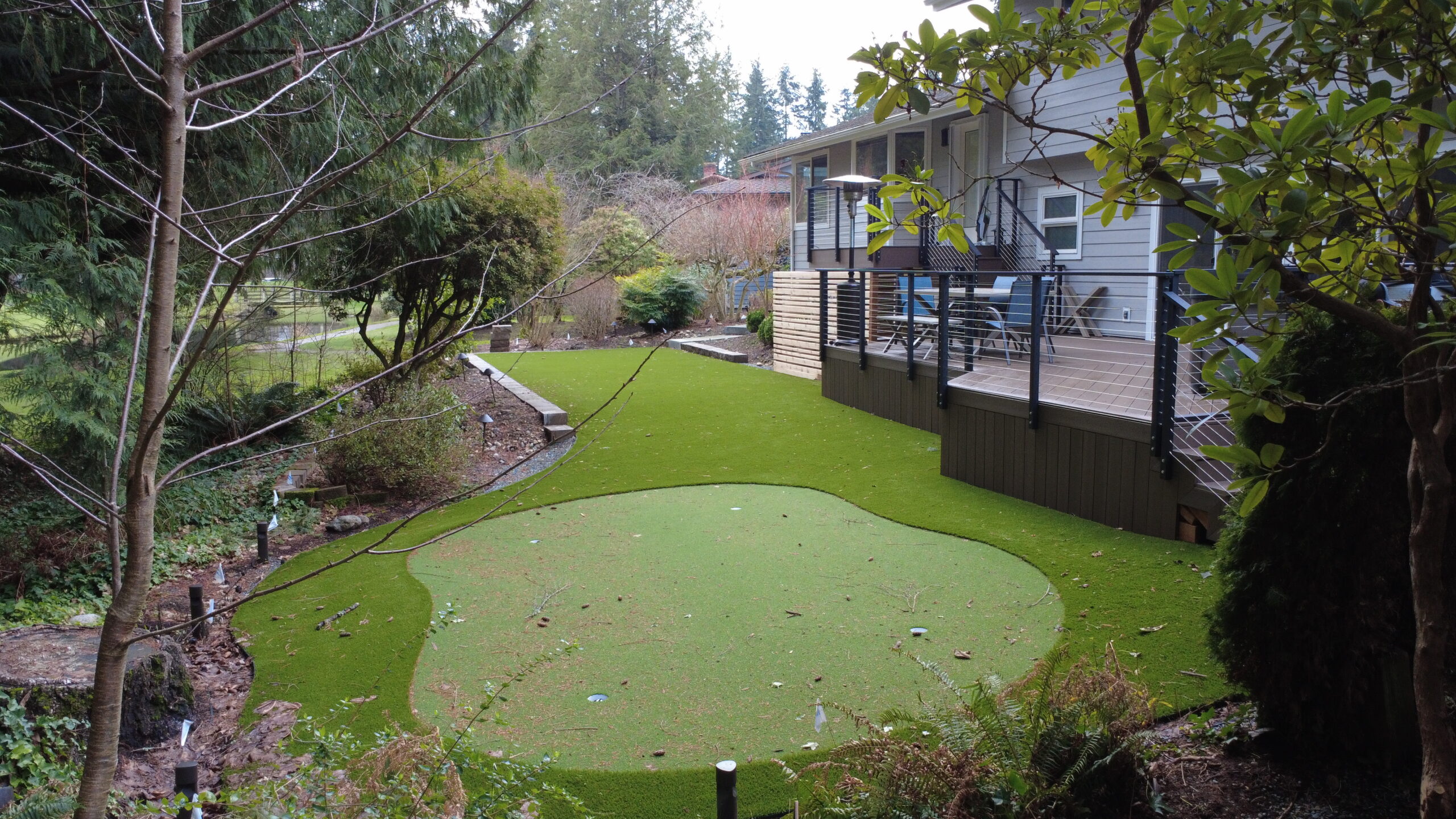
Create a Calm, Clean Retreat for You and Your Pets
A quiet yard can make life with pets in Seattle a lot easier. Small yards, shared fences, and thin walls mean every bark, zoomie, or dropped toy can echo from house to house. When the ground is wet and muddy, those noisy outings also turn into messy floors and endless towel duty.
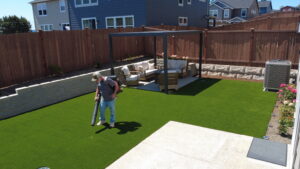
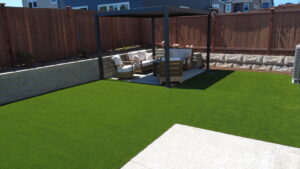
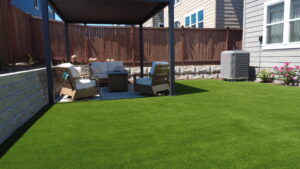
A pet-friendly artificial grass installation can help turn that chaos into a calm space. With the right design, turf can look and feel like natural grass but stay cleaner, drain better in the rain, and soften sound from running paws. In this article, we will walk through sound considerations, pet behavior, material choices, and layout ideas that work especially well in our Pacific Northwest climate and in tight Seattle neighborhoods.
We work in this environment every day, so we understand local codes, drainage limits, and the pressure to keep both pets and neighbors happy. The goal is simple: a calm outdoor retreat that your pets love and that you feel good using every day.
Why Noise Matters in Seattle Pet Yards
In dense parts of Seattle, yards often back up to alleys, townhomes, and condo buildings. Sound bounces between houses, fences, and retaining walls, which can make a single excited dog sound like a pack. That echo adds stress for noise-sensitive neighbors and can set off more barking.
Common backyard surfaces can make things louder than they need to be. For example:
- Gravel and rock can rattle under paws and toys
- Hard concrete or pavers can create sharp echoes and footfalls
- Cheap turf over a hard base often slaps when dogs run or land
When pets are already anxious or reactive, sharp noise can make them more keyed up. A calmer, softer yard can help pets settle faster and may reduce how often they bark or pace along the fence. The surface you choose is part of that, but so is how the entire yard is planned.
By treating your pet-friendly artificial grass installation like a small sound project, you can absorb and scatter some of that energy. Thoughtful materials and design will not fix every noise issue, but they can take the edge off daily play and bathroom breaks.
Choosing Quiet, Pet-Safe Turf Materials
Not all artificial grass feels or sounds the same. The way the turf is built has a big impact on both noise and comfort.
Key parts of the system include:
- Pile height, longer blades usually feel softer and can muffle sound a bit
- Density, more yarn per square foot can absorb more impact
- Infill type, what is brushed into the turf to support the blades
- Backing, the material that holds the blades in place
Infill options often include things like crumb rubber, silica sand, coated sand, and pet-focused specialty infills. For pet yards, many homeowners care about:
- Odor control and how well the system handles urine
- Drainage so the yard dries out between Seattle rain showers
- Noise when paws hit the surface at full sprint
Certain pet infills are made to help with odor and stay more stable, which can also help keep sound more consistent. Sand-based infills often stay quieter than rubber when installed correctly, since they do not bounce or squeak underfoot.
Safety and comfort matter too. We talk with homeowners about:
- Non-toxic materials that are safe for pets to lounge on
- A paw-friendly texture that will not scratch or feel prickly
- How hot turf feels on those rare warm, sunny afternoons
- Traction on wet days so dogs do not slip when they run
At Pacific Turf Northwest, we select premium, ultra-realistic turf systems that are built for pets and for our wet climate. The goal is a soft, natural feel combined with good noise control, strong durability, and simple cleanup.
Smart Yard Design for Quieter Play and Potty Time
Even the best turf sounds better when the yard layout helps you. Where you place active play areas and how you shape the base under the turf can change how much sound neighbors hear.
We often suggest:
- Putting high-activity zones away from shared bedrooms when possible
- Keeping fetch lanes angled across the yard instead of straight at a fence
- Separating play areas from main patios to reduce sharp noises near doors
Layering under the turf is also a big factor. A proper base and, in many cases, a shock pad can soak up impact and soften paw noise. That same layering helps with:
- Drainage for constant Pacific Northwest rain
- Impact absorption for seniors and high-energy dogs
- Long-term comfort so the yard stays consistent over time
Softscape and hardscape can be used to block both sight and sound. Thoughtful elements include:
- Raised planters or privacy hedges to break up sound waves
- Fences that reduce sightlines to sidewalks and alleys
- Small seating zones slightly removed from the busiest dog paths
For fall and winter, we focus on grading, drainage lines, and nonslip transitions. When the yard drains well, you avoid puddles that lead to splashing, slipping, and extra noise and frustration during every bathroom trip.
Managing Odor, Mud, and Maintenance Quietly
One of the nicest parts of a pet-friendly artificial grass installation is how it simplifies daily life. The right system helps you manage odor and mess with less effort and less noise.
Good design usually includes:
- Dedicated potty zones to focus cleanup
- An efficient drainage base with turf that lets liquids pass through
- Infill options that help reduce or neutralize urine smells
Maintenance does not need to be loud or complicated. Many homeowners keep things fresh with:
- Light rinsing that works with natural rainfall patterns
- Pet-safe enzyme cleaners in high-use spots
- Occasional brushing of the turf with quiet, manual tools
Turf also removes most mud issues. No more loud blow dryers on wet paws, piles of dirty towels, or constant vacuuming after every rainy walk across the yard. With proper installation, trapped moisture, puddling, and base compaction are less likely, which helps keep odors and noise-related headaches to a minimum over time.
How Pacific Turf Northwest Tailors Installations for Seattle Pets
Every Seattle yard is a little different, so we start by looking at both the pets and the space. During our planning process, we pay attention to:
- Pet size, energy level, and how they like to play
- Potty habits and any known odor or marking issues
- Noise sensitivity, both for pets and for neighbors
- Soil type, sun and shade patterns, and surrounding buildings
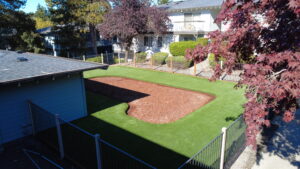
From there, we design custom turf systems for each zone, play, potty, and rest. That might mean stronger backing and denser infill where dogs sprint, plus extra drainage where they tend to go to the bathroom. We also think about how sound moves around nearby houses, patios, and windows.
Seattle properties can include small city lots, rooftop terraces, shared courtyards, or sloped side yards. We adjust designs and material choices to match each case, whether that means lighter base materials for rooftops, special drainage planning for tight urban spaces, or terraced layouts for hills.
Planning your yard with noise, comfort, and climate in mind gives your pets more freedom, reduces tension with neighbors, and lets you enjoy a calm, green space all year.
Get Started With Your Project Today
Transform your yard into a cleaner, safer space for your pets with our expert pet-friendly artificial grass installation. At Pacific Turf Northwest, we take the time to understand how your pets use your outdoor space so we can recommend the right materials and drainage solutions. If you are ready to upgrade your lawn, contact us and we will help you plan a project that fits your home and budget.