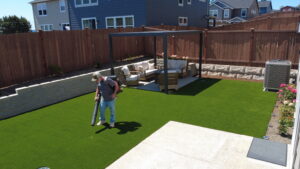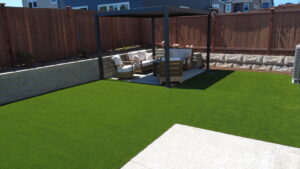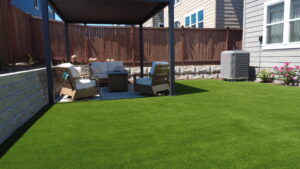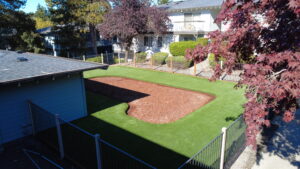
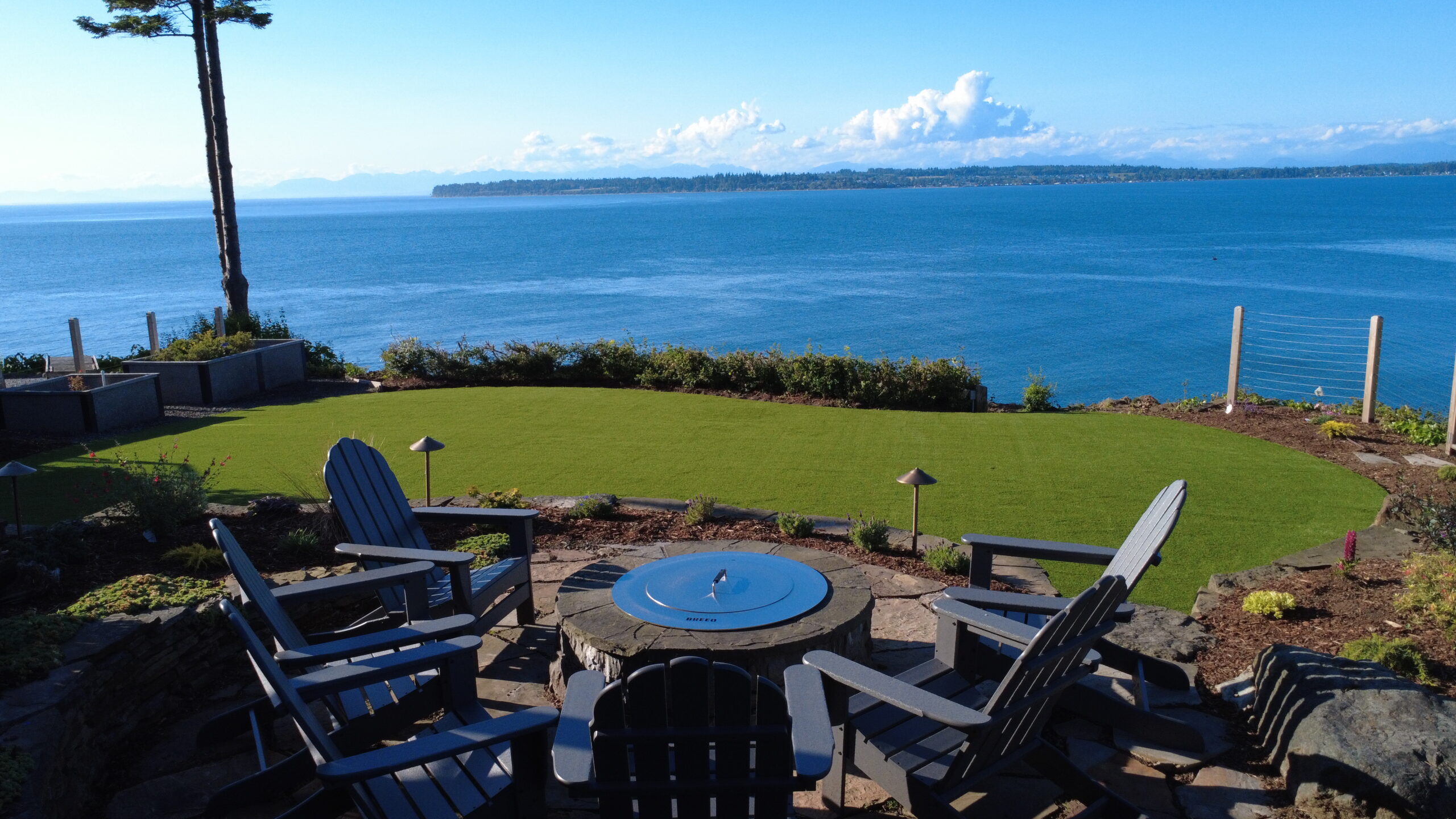
Artificial grass has become a go-to choice for creating clean, green outdoor areas without complicating upkeep. Around Seattle, we’ve seen more homeowners and property managers moving toward turf because it looks good year-round and needs much less maintenance than traditional lawns. But Seattle’s wet springs and near-constant sogginess come with challenges, especially when it comes to water drainage under synthetic turf. At Pacific Turf Northwest, our synthetic lawn installations are built on a compacted gravel base and use turf with superior drainage performance to help yards stay ready for use even during long stretches of wet weather.
Standing water can turn a great install into a frustrating mess if no one plans for where the rain will go. That’s where drainage grids come into play. They’re not something homeowners usually think about, but they make a big difference from the ground up. For anyone planning artificial grass installation in Seattle, drainage is a key part of building a long-lasting outdoor space that works in every season.
How Pooled Water Affects Synthetic Turf
When water just hangs around instead of draining off, it doesn’t take long to notice. Turf gets slick, especially in the corners where water collects. Cold puddles make outdoor space less usable, and when water sticks around too long, it can even start to smell. You might see turf shift or buckle in wet patches or notice how the surface feels spongy instead of solid underfoot.
Seattle gets more rain than many parts of the country, and a lot of yards around here have soil that doesn’t drain well. That’s part of what makes pooled water more than just a minor issue. Without a solid drainage plan, those wet zones stick around day after day. Over time, they wear out the turf faster. That’s not ideal in high-traffic spots like play areas, pet paths, or backyard hangouts.
What Drainage Grids Are and How They Work
Drainage grids are rigid panels that sit beneath the turf to give water somewhere to go. Each panel is raised just enough to lift the turf layer above the soil, making space for water to move out more quickly. The open bottom allows gravity to do its thing, keeping the surface dryer above.
They’re shaped a bit like checkerboards or interlocking mats, and they go in before the turf is rolled out. These grids don’t just keep water moving, they help keep everything in place and give the surface a smoother, more stable feel.
Drainage grids make a lot of sense in places where turf is used every day. Some common areas that benefit include:
- Backyards that get muddy during long rainy stretches
- Pet-friendly turf zones where moisture builds fast
- Playgrounds or shared courtyards that need clean, dry surfaces
Benefits of Adding Drainage Grids Beneath Turf
When you include drainage grids in a turf project, it changes how the whole space performs after the rain. Water that used to sit for hours now moves quickly out of the way. The top layer dries faster, making it easier to go outside without stepping into puddles.
If you’ve got a dog or kids running around, that makes a big difference. Wet turf stays slippery longer without drainage support, which makes comfort and safety a real concern. Grids bring more structure to the surface, especially noticeable in areas where people walk or play every day.
Another upside comes from what you don’t see. When water can’t drain, it builds up below the turf and weakens the system over time. That leads to seams loosening, wrinkles forming, or turf breaking down before it should. By keeping water from hanging around, the whole yard or play space holds together better for longer.
Why Drainage Planning Matters in Seattle Yards
Seattle gets lots of rain, and not just for a few weeks. It stretches across multiple seasons, which means outdoor turf needs to handle water coming from all directions. Our soils often hold onto moisture longer than they should, especially in flat or shaded yards where the sun can’t help dry things out.
For turf installs on slopes or uneven ground, water can pool in low spots unless it’s funneled out correctly. With proper drainage installed underneath, those natural problem zones are easier to manage.
If you’re working with an older yard that has poor grading or compacted soil, relying on turf alone to solve mud problems is risky. A well-thought drainage setup can give turf the support it needs to actually work the way people expect. That means fewer surprises after a downpour, and fewer muddy returns indoors. Our turf systems are backed by a 5 year construction warranty and a 10 year product warranty, so when drainage is planned correctly, both the base and the surface are built for long-term performance.
Stay Dry, Stay Green: Why Good Drainage Makes the Difference
Turf that dries quickly is turf that gets used more often. Drainage grids are one of those behind-the-scenes systems that people rarely notice, yet they have a big impact on how a space feels and functions.
Starting with smart drainage planning leads to better results on top. Grids give your yard or play space more stability, more comfort, and more dry days, even in the heart of Seattle’s rainy season.
Planning ahead doesn’t just help in winter or spring. It keeps turf stronger through every season, helping you get the most out of whatever outdoor area you’re building. And when the ground works with you instead of against you, everything stays cleaner, smoother, and more enjoyable all year long.
At Pacific Turf Northwest, we plan every turf install with long-term use in mind, and in a rainy place like Seattle that always includes drainage. Whether your space is small or stretches across a full backyard, water management under the turf makes all the difference. If you’re mapping out your project and want it to stay dry, clean, and easy to enjoy, proper support underneath is a must. You can read more about artificial grass installation in Seattle to see what goes into getting it right. Reach out when you’re ready to talk through your ideas.