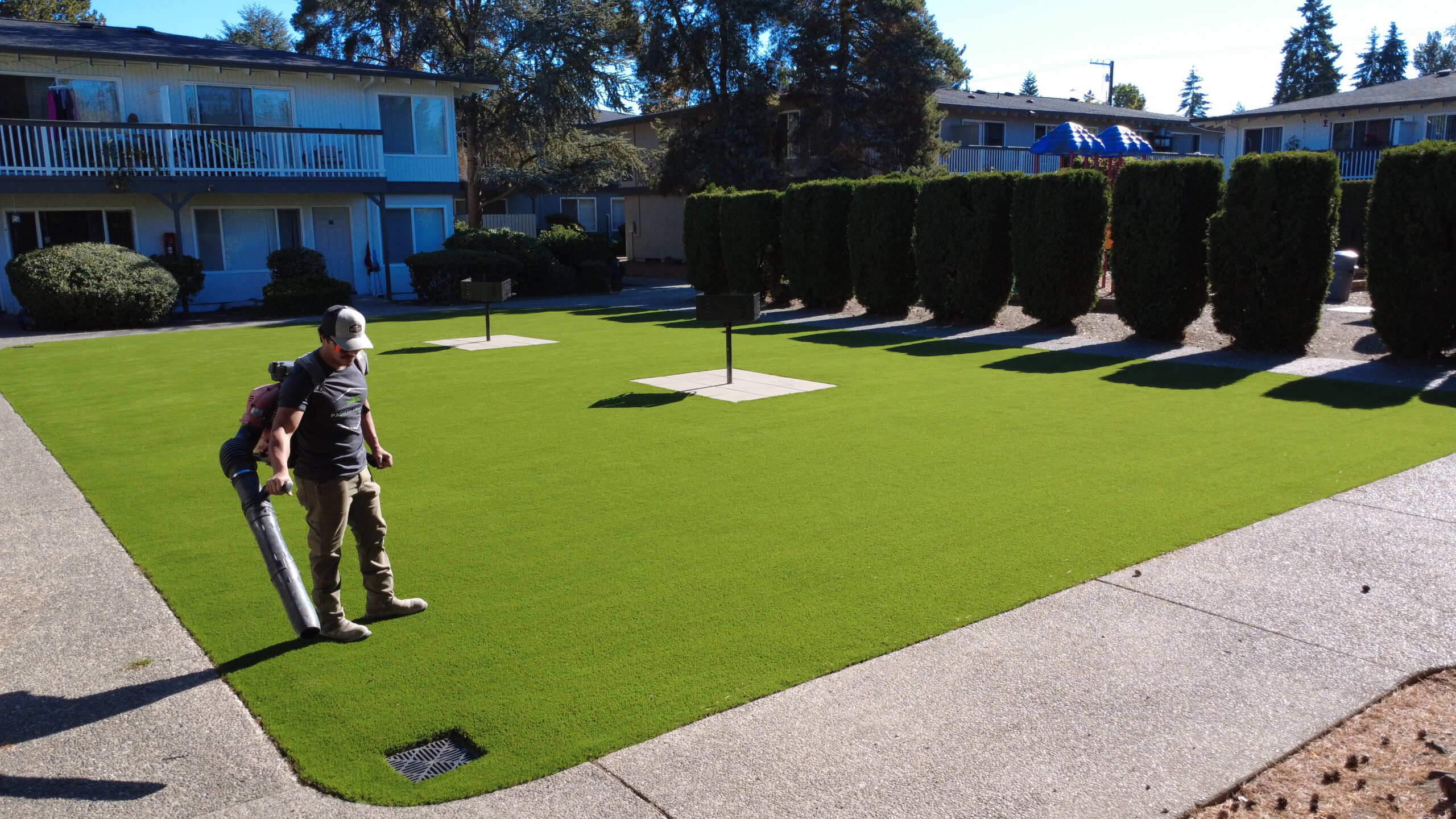
Transform Your Backyard Into a True Sports Zone
Turning a regular Seattle backyard into a real sports space is very possible, even with all our rain. More families want a place at home where kids can practice soccer, parents can shoot hoops, and everyone can play together without dealing with mud and torn-up grass. Artificial turf is one way to make that happen, and it works especially well in our Pacific Northwest climate.
The big question is simple: Is artificial turf in Seattle a smart choice for backyard sports courts, or will the weather and wear be too much for it? Here, we will walk through how our climate affects play, what turf does well, where it has limits, and what to think about when you design a sports court for your own yard. We will also share how a professional installer plans a project so it stays safe, attractive, and fun for years.
How Seattle’s Climate Impacts Backyard Sports Use
Natural grass struggles when it has to be both a lawn and a sports field. In the Pacific Northwest, it stays damp for long stretches, so regular play quickly turns into:
- Thin, bare spots in front of goals or under a hoop
- Persistent mud that tracks into the house
- Slippery footing, even when it did not rain that day
Short winter days and long stretches of drizzle make it even harder to keep a grass or dirt court in good shape. The ground often stays soft, so every sprint, pivot, and kick digs it up a little more. What starts as a nice green yard can turn into ruts and patches that never really recover.
To keep grass usable for sports, many homeowners end up spending a lot of time on:
- Aerating compacted soil
- Reseeding worn areas
- Mowing and edging around goals and nets
- Adjusting drainage to deal with puddles
That is why many families start looking at artificial turf in Seattle. They want a dependable practice area for kids, time outside that does not depend on the weather, and a low-maintenance surface that does not need constant repair after every weekend of play.
Key Advantages of Artificial Turf for Sports Courts
Consistent, All-Weather playability
A well-built artificial turf system drains quickly, so you can often go outside soon after a rain without worrying about sinking in or tearing up the surface. Instead of mud patches and puddles, you get:
- More consistent traction underfoot
- A predictable ball roll for soccer and small-sided games
- Fewer cancellations for backyard practices
For skills training, that steady footing can make a big difference. Kids can focus on footwork, passing, and shooting, not on dodging muddy holes.
Lower Maintenance and Longer Season
Artificial turf does not need mowing, watering, or seasonal reseeding. Routine care usually means:
- Brushing the fibers to keep them standing upright
- Removing leaves and small debris
- Checking infill levels and topping up when needed
Because the surface does not depend on live grass, the usable season can stretch from early spring through late fall, with fewer breaks. You are not waiting for muddy areas to heal or new seed to sprout, so the court is ready whenever the family is.
Cleaner, Safer Surfaces for Families
High-use grass areas often get uneven. Ruts, holes, and slick spots can raise the risk of slips or awkward landings. Artificial turf can be paired with a stable base and, if desired, a shock pad underneath for extra cushioning. That can help when kids:
- Practice slide tackles or aggressive defense
- Take frequent spills learning new sports
- Jump and land under a hoop or in an agility zone
The result is a surface that stays level and clean, which is helpful for both kids and adults.
Designing the Right Turf Court for Your Favorite Sports
Matching Turf Types to Specific Sports
Not all turf is the same. Pile height, density, and infill choices all affect how it plays. For example:
- Shorter, denser turf for multi-sport zones under a basketball hoop
- Slightly taller turf for small-sided soccer or football training
- Tighter surfaces for agility lanes and footwork drills
A professional installer can plan the system so it feels close to the surface you want to imitate, with traction and speed that match your top sports.
Layout, Lines, and Multi-Use Planning
Backyard space is limited, so planning for more than one sport is common. Popular layouts include:
- A mini soccer pitch that can double as a play lawn
- A rectangle with a basketball key at one end and open space at the other
- A multi-use court marked for small soccer, pickleball, or volleyball
Lines can be permanent or removable. Some homeowners like subtle, neutral lines that blend with the yard, while others choose brighter colors that make the court feel more like a real field.
Blending Utility With Curb Appeal
A turf court does not have to look like a big green box. It can be framed with:
- Planting beds or raised planters
- Paver or stone borders
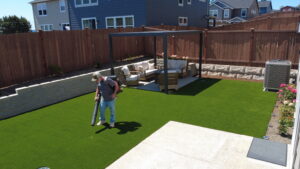
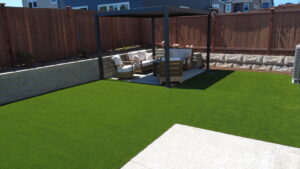
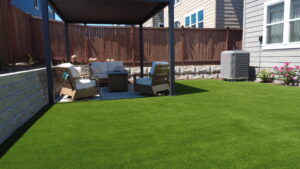
- Adjacent natural lawn or a putting green
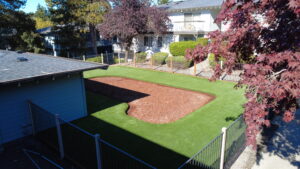
When it is designed to suit the rest of the landscape, a turf sports area can feel like a natural part of the yard rather than an add-on.
What to Know About Installation and Performance in Seattle
Site Prep and Drainage Done the Right Way
In the Pacific Northwest, good drainage is key. Before turf goes down, the installer should:
- Evaluate soil type, existing slopes, and runoff paths
- Create a compacted, stable base with the right grading
- Plan drainage so water has a clear path away from the surface
This helps prevent puddling, soft spots, and shifting over time, which is especially important for sports use.
Safety, Shock Padding, and Longevity
Under the turf, optional shock pads or cushioned layers can help reduce impact for running, jumping, and falls. This is especially helpful for kids, older adults, or anyone doing frequent drills.
The lifespan of a premium backyard sports turf depends on:
- How often and how intensely it is used
- How well routine maintenance is handled
- The quality of the materials and installation
With proper care and reasonable use, many homeowners enjoy consistent performance for years.
Addressing Heat, Glare, and Environmental Concerns
Artificial turf can feel warmer than grass on bright, sunny days. In Seattle, summer heat is usually moderate, and newer turf fibers are often designed to stay more comfortable than older styles. Simple steps like adding shade in part of the area or planning play times for mornings and evenings can also help.
From an environmental point of view, turf courts avoid fertilizers and regular pesticides, and they can cut outdoor water use compared to a high-maintenance grass field. Choosing durable, long-lasting turf systems also means fewer replacements over time.
When Artificial Turf in Seattle Is the Right Call
Artificial turf sports courts tend to work best for:
- Active families with kids in soccer, football, or similar sports
- Homes with limited flat space that needs to serve several activities
- Shady or wet yards where grass never really fills in
- Areas near patios or outdoor living spaces where mud is a constant problem
There are still a few things to think about. Up-front installation is a bigger project than laying seed, and expert design is important to avoid drainage issues or uneven bases. On rare very hot days, the surface may feel warmer, so some families prefer partial shade or mix in other materials around the court.
Seasonal timing also matters. Planning during drier months can make installation smoother, but a skilled team can often handle work during cooler or wetter periods too, as long as site conditions are right. That way, your court is ready for the next big stretch of play.
For homeowners who want a clean, reliable, all-weather sports area, artificial turf in Seattle can be a strong choice. With thoughtful design and professional installation, a backyard sports court can turn into a favorite spot for practice, play, and time together at home.
Transform Your Seattle Lawn With Low-Maintenance Greenery Today
If you are ready to trade muddy patches and constant upkeep for a clean, beautiful yard, our team at Pacific Turf Northwest is here to help. Explore how our pet-friendly artificial turf in Seattle can give you a consistently green space that fits your home and lifestyle. Tell us about your property goals, and we will recommend the best installation plan for your needs and budget. Have questions or want to schedule a consultation now? Simply contact us to get started.